---
TATTOO MEANINGS / SEA LIFE / SHARK
Protection, courage, guidance, warrior spirit, ancestral connection
The shark tooth — the niho mano in Polynesian tattoo — is one of the oldest protective symbols in the Pacific. A shark-tooth tattoo reads as armor: courage, guidance, and shielding yourself and your family from harm. Unlike a full predator, the tooth is portable protection — a small, repeatable motif you can weave through any design.
In Polynesian tattoo the niho is the tooth of the shark — a primary guardian. It is a common misconception that "niho" simply means "tooth"; in tattoo context it specifically references the shark tooth and the protective mana of the mano (shark). Worn as a repeating pattern (the niho or "dog-tooth" zigzag), it is armor against harm and a marker of warrior status. In Hawaiian culture the shark is an ʻaumākua, a family guardian spirit, so the tooth connects the wearer to ancestral protection. The lokahi (unity) principle — balance of land, sea, and sky — is often expressed through niho borders that frame a larger piece.
A frequent error is translating niho as simply ‘tooth.’ In Polynesian tattoo the niho specifically references the shark tooth (mano) and the protective mana carried in it. The repeating niho — sometimes called the ‘dog-tooth’ zigzag — is one of the most widespread guardian motifs across Samoa, Tonga, and Māori work. So the word is not an anatomy lesson; it is a protective title. Knowing this changes how you wear it: as guardian armor, not decoration.
In Hawaiian tradition the shark is an ʻaumākua — a family guardian spirit passed down through generations. The niho connects the wearer to that lineage of protection and to safe passage over water. This is why the tooth is often worn close to the body and close to the heart: it is less about the individual predator and more about the ancestors watching over you. Frame it with intention, not as a random pattern.
Lokahi is the Hawaiian principle of unity — land, sea, and sky in balance. Niho borders are frequently used to frame a larger composition that expresses lokahi, reminding the wearer to keep every part of life in harmony. In this role the shark tooth becomes a boundary of wholeness: it protects the edges so the center can hold. A tooth band around a piece is rarely just ornamental in traditional logic.
Long before it reached the skin, the shark tooth was worn as jewelry and armor across the Pacific — Hawaiian legend tells of Pele transforming a woman into a shark, after which Hawaiians tattooed shark teeth for protection and connection to the deity. Warriors and chiefs wore shark-tooth patterns as markers of rank and readiness for battle. Today the motif travels far beyond Polynesia: surfers and ocean enthusiasts wear it as personal strength and a tie to life’s changing tides.
Marquesan tattoo uses several distinct shark-tooth shapes — often called pike or spearhead motifs — each with a slightly different grammatical role in the overall composition. The same animal yields multiple protective variants depending on placement, orientation, and what it is combined with. This is a useful reminder that ‘shark tooth’ is not one symbol but a family of them; the specific shape you choose carries a specific protective intent.
The niho is not a generic ‘tribal’ doodle. The respectful approach for non-Polynesian wearers: learn the meaning, credit the source culture, avoid carelessly mixing sacred motifs, and where possible consult or work with a Polynesian artist. Appreciation with attribution beats appropriation without context. A well-researched niho honors the tradition; a copied ‘tribal band’ from a flash sheet often does not.
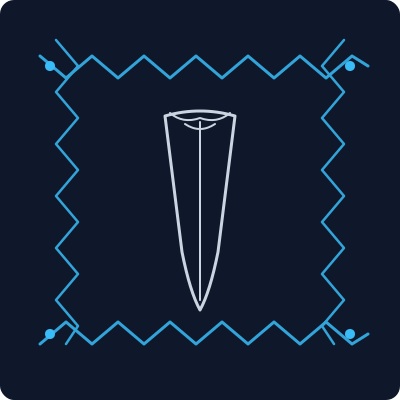
Designs range from a single realistic tooth (emphasize the serrations) to a minimalist outline to a full tribal niho band. A necklace-style row of teeth reads as continuous protection; a band around an arm or calf becomes a literal shield. Popular placements are the wrist and forearm (constant visible reminder), shoulder or upper arm (room for bands), and the ribcage or side for a more intimate statement. Blackwork is standard; watercolor versions add a modern edge.
A full shark embodies the animal’s specific story — great white dominance, hammerhead vision. The shark tooth is portable, repeatable protection you can weave into any design: a band, a border, a single focal point. If you want guardian armor you can carry anywhere, the niho is the move. If you want to become the predator’s story, wear the full shark. Many wearers do both — a niho band framing a great white, uniting protection and power.
DESIGN GALLERY
Browse design ideas and find artists who specialize in this style.
Line-art design
1,000+
monthly searches
87%
want to book after reading
0
artists showcasing here
Are you a tattoo artist?
1000+ people search for shark tooth tattoo (niho mano) tattoos every month. Your work could be the first they see. Upload your portfolio — it is free and takes 2 minutes.
First 10 artists to upload get 3 months Pro free.
Find, price, and book the design you're exploring.
A shark tooth (niho mano in Polynesian tattoo) is primarily a protective symbol — armor against harm, courage, and guidance. Worn as a repeating zigzag pattern it marks warrior status and shields the wearer and family. It is portable protection, unlike a full predator.
A common simplification is that niho just means "tooth." In tattoo context, niho specifically references the shark tooth and the protective mana of the mano (shark). The repeating niho or "dog-tooth" zigzag is one of the most widespread protective motifs across Polynesian, Samoan, and Māori work — so the word carries guardian meaning, not just anatomy.
In Hawaiian culture the shark is an ʻaumākua — a family guardian spirit. Wearing the niho connects the wearer to that ancestral protection and safe passage over water. It is less about the individual animal and more about the lineage of guardians watching over you.
Lokahi is the Hawaiian principle of unity and balance — specifically land (ʻāina), sea (kai), and sky (lekua) in harmony. Niho borders are often used to frame a larger piece expressing lokahi, reminding the wearer to keep all parts of life in balance. The tooth becomes a frame for wholeness, not just a standalone charm.
In Marquesan tattoo the shark tooth (often called the "pike" or spearhead motif) is a symbol of protection and ferocity in battle — a warrior’s mark. Marquesan work uses multiple distinct tooth shapes with slightly different grammatical roles, so the same animal yields several protective variants depending on placement and combination.
Many non-Polynesian wearers honor the niho as a protection symbol while crediting its roots. The respectful approach: learn the meaning, credit the source culture, avoid mixing sacred motifs carelessly, and consider working with or consulting a Polynesian artist. Appreciation with attribution beats appropriation without context.
Yes. The tooth is the weapon and the trophy of the ocean’s apex predator, so wearing it signals courage and a warrior spirit — facing danger rather than fleeing. As a repeating pattern it becomes armor: quiet, constant, worn close to the skin.
The niho works as a band (arm, leg, wrist), a border framing a larger piece, or a single bold tooth as a focal point. It pairs naturally with waves (element), turtles (guidance), and the full shark (source of the tooth). Because it is small and repeatable, it is one of the most versatile protective motifs in the Pacific vocabulary.
A full shark (great white, hammerhead) is a statement of the predator’s specific traits — power, vision, dominance. The shark tooth is portable, repeatable protection you can weave anywhere. Pick the tooth if you want guardian armor; pick the full shark if you want to embody the animal’s story.
Get matched with the right meaning and style for your next tattoo.
Start Your Studio Free →Sources
EEAT: Written by Sarah Chen (Founder & CEO at InkFlow | 12 Years Tattoo Studio Operations). Verified against National Geographic. Cultural and historical information is sourced from academic and specialist references and is provided for educational purposes. Meanings vary across traditions and interpretations.